When the salmon comes out, the honey-lime glaze is glossy around the edges and the fish is tender enough to separate with a fork. I make these fillets on parchment because it keeps the cleanup simple and lets the glaze stay right where I brushed it. Honey Lime Salmon has a bright, sweet-tart coating without a separate pan or a long list of ingredients.
The balance comes from using lime in two forms: juice brings acidity, while finely grated zest adds a fragrant citrus note. Whisking both with honey, garlic, and olive oil makes a quick glaze that clings to the top of the fish. Patting the salmon dry first gives it a better surface for that glaze to hold onto.
Keep the fillets skin side down and bake them until the thickest part reaches 145°F. The result is tender salmon with a lively lime finish and a little sweetness in every bite.
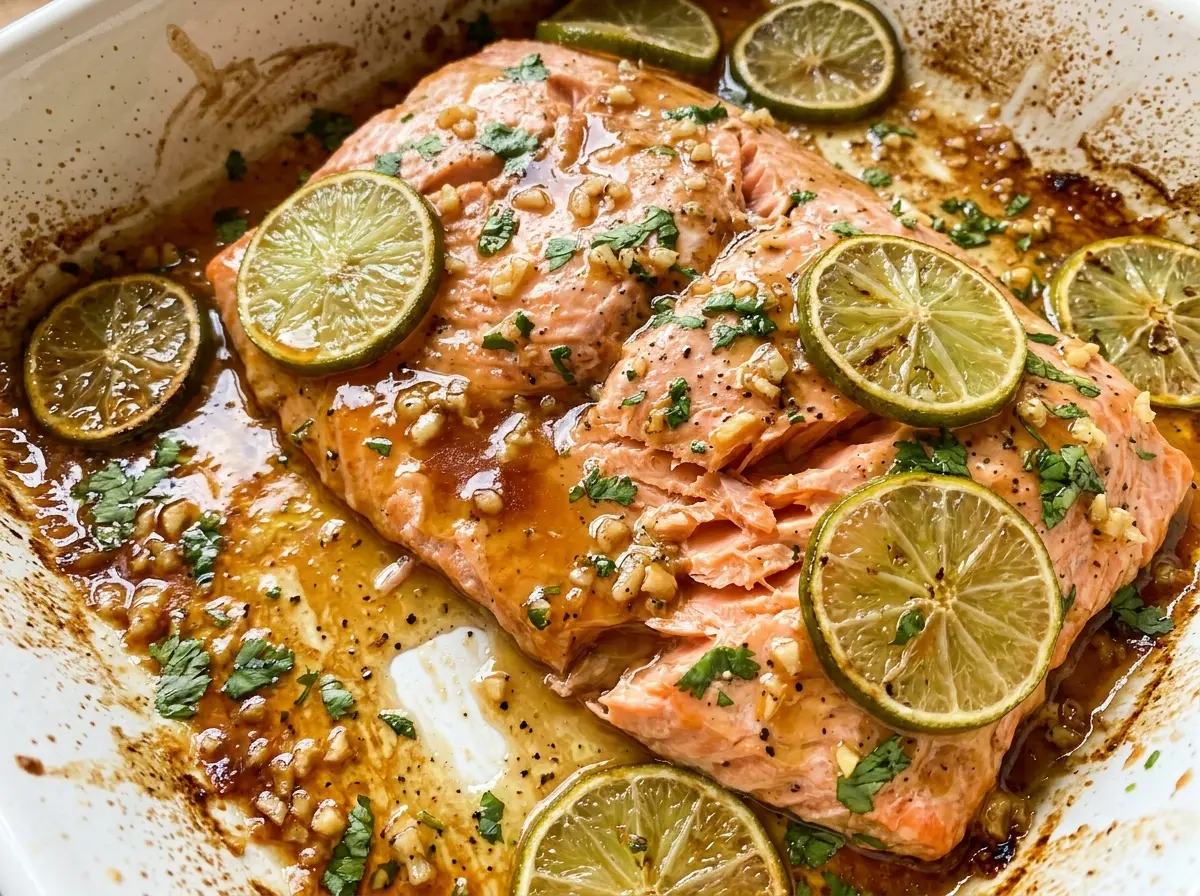
Kitchen Note
Start checking the fillets at the 12-minute mark; thinner pieces can be ready before thicker ones. I take the temperature in the thickest part of each piece, since the edges cook faster.
Save Honey Lime Salmon for a night when you want tender fish with a glossy, sweet-tart lime glaze and almost no cleanup.
Why the Skin Stays Down Even Though It Won’t Turn Crisp
Skin-on salmon baked on parchment won’t have the crackly skin you’d get from a hot skillet. The skin faces the paper rather than direct contact with a bare pan, so it stays softer. That’s not a problem with the method; this is a gentle oven-baked fillet, not a crisp-skin preparation.
Leaving the skin on still has a practical upside. It helps the fillet hold together as it bakes and gives you a little more protection between the delicate flesh and the hot baking sheet. Keeping the fish skin side down also leaves the top exposed for an even coat of glaze.
If crisp skin is your goal, this particular setup won’t deliver it. Here, I’m after moist salmon and a glossy honey-lime coating, with parchment making it easier to lift the portions from the pan. The skin can stay on the plate when you serve the fish if you don’t want to eat it.
Why Fresh Lime Does More Than Make the Glaze Sour
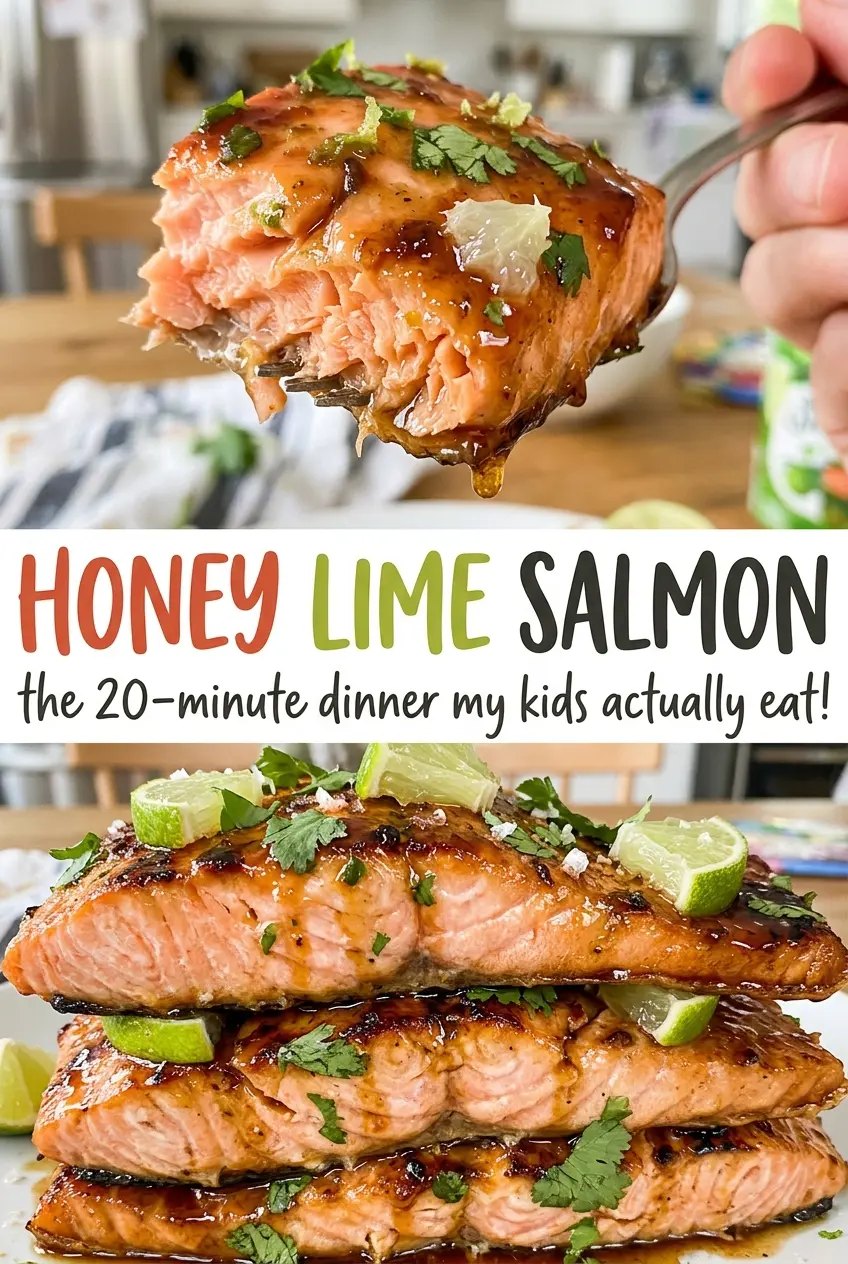
- Salmon — Fillets with similar thickness tend to finish closer together, which matters more than choosing a premium label. Skin-on salmon is the best fit for this method; skin-on trout is the closest swap, though its flavor is milder and its thickness can change the bake time.
- Honey — Plain liquid honey is all you need; a specialty variety won’t make or break the glaze. Pure maple syrup can replace it measure for measure, but the coating will taste more woodsy and may be a little less glossy.
- Lime — Fresh fruit matters here because the zest brings fragrant oils that bottled juice can’t supply. If limes aren’t available, use lemon juice and finely grated lemon zest in the same amounts; the glaze will taste softer and less distinctly lime-forward. Grate only the colored peel, not the bitter white pith.
- Garlic — Freshly minced garlic gives the glaze a sharper savory edge, though a small pinch of garlic powder works when that’s what you have. Jarred minced garlic is convenient, but its flavor is milder, so the finished glaze won’t have quite the same fresh bite.
- Olive oil — A basic olive oil is fine because it’s blended into the glaze rather than used for high-heat searing. Avocado oil is a neutral substitute; use the same measure and expect a less fruity note.
How to Get the Glaze onto the Salmon Before It Goes in the Oven
Set Up the Fillets Skin Side Down
Heat the oven to 400°F and line a rimmed baking sheet with parchment paper. Pat the salmon dry, then arrange the fillets skin side down with a little room between them. Season the tops evenly with kosher salt and black pepper. If the surface is still wet, the seasoning and glaze have a harder time staying put.
Whisk a Smooth, Pourable Glaze
In a small bowl, whisk together the honey, fresh lime juice, finely grated lime zest, minced garlic, and olive oil. Keep whisking until the ingredients look evenly combined and the zest and garlic are distributed through the mixture. If the oil separates while the bowl sits, whisk it again just before brushing. That quick re-whisk helps each fillet get a balanced coating instead of an oily patch.
Brush, Bake, and Check the Thickest Part
Brush the glaze evenly over the salmon, covering the exposed tops of the fillets. Bake for 12 to 15 minutes, then check the thickest part of each piece with an instant-read thermometer. The salmon is ready when each thickest section reaches 145°F. Don’t rely on the edge of a fillet to judge the center; the thin ends heat through first.
Three Small Changes for a Different Honey-Lime Salmon
Bring in a Little Heat
Whisk a pinch of red pepper flakes into the honey-lime glaze before brushing it on. The gentle heat cuts through the sweetness without hiding the citrus, and the flakes leave a few warm bites rather than making the whole dish fiery.
Make It Lower in Sodium
Use a salt-free lemon-pepper seasoning in place of the kosher salt and black pepper. It gives the fish a brighter, herbier edge while reducing added sodium; the salmon will taste less deeply seasoned than the original.
Finish with Fresh Herbs
Scatter chopped cilantro over the salmon after baking for a fresh, green contrast to the honey and lime. Add it at the end rather than mixing it into the glaze, where it would lose its clean aroma in the oven.
Storage and Reheating
- Refrigerator: Refrigerate leftovers in a covered container within 2 hours and eat them within 3 to 4 days. The chilled glaze will look less glossy, and the salmon will be firmer.
- Freezer: Freeze cooled portions in an airtight container for up to 2 to 3 months. The fish is safe to freeze, though thawed salmon may be a little drier and the glaze less smooth.
- Reheating: Reheat covered in a 275°F oven until the center reaches 165°F, or use short bursts in the microwave. High heat and long reheating tend to dry salmon out.
Questions That Come Up Before the Salmon Goes in the Oven
Honey Lime Salmon
Ingredients
Equipment
Method
- Preheat the oven to 400°F.
- Line a rimmed baking sheet with parchment paper.
- Pat the salmon dry.
- Arrange the fillets skin side down on the baking sheet.
- Season the salmon evenly with the salt and pepper.
- Whisk the honey, lime juice, lime zest, garlic, and olive oil in a small bowl.
- Brush the glaze evenly over the salmon.
- Bake for 12 to 15 minutes, until the thickest part of each fillet reaches 145°F.