The broth starts bubbling like a simple tomato soup, then the broken lasagna noodles go in and turn it into something much heartier. I like that this soup doesn’t ask you to build a separate sauce or fuss with layers; the jarred spaghetti sauce gives the pot a savory tomato base, while beef and onion make it substantial. The noodles cook right in the soup, which means they pick up that tomato flavor as they soften.
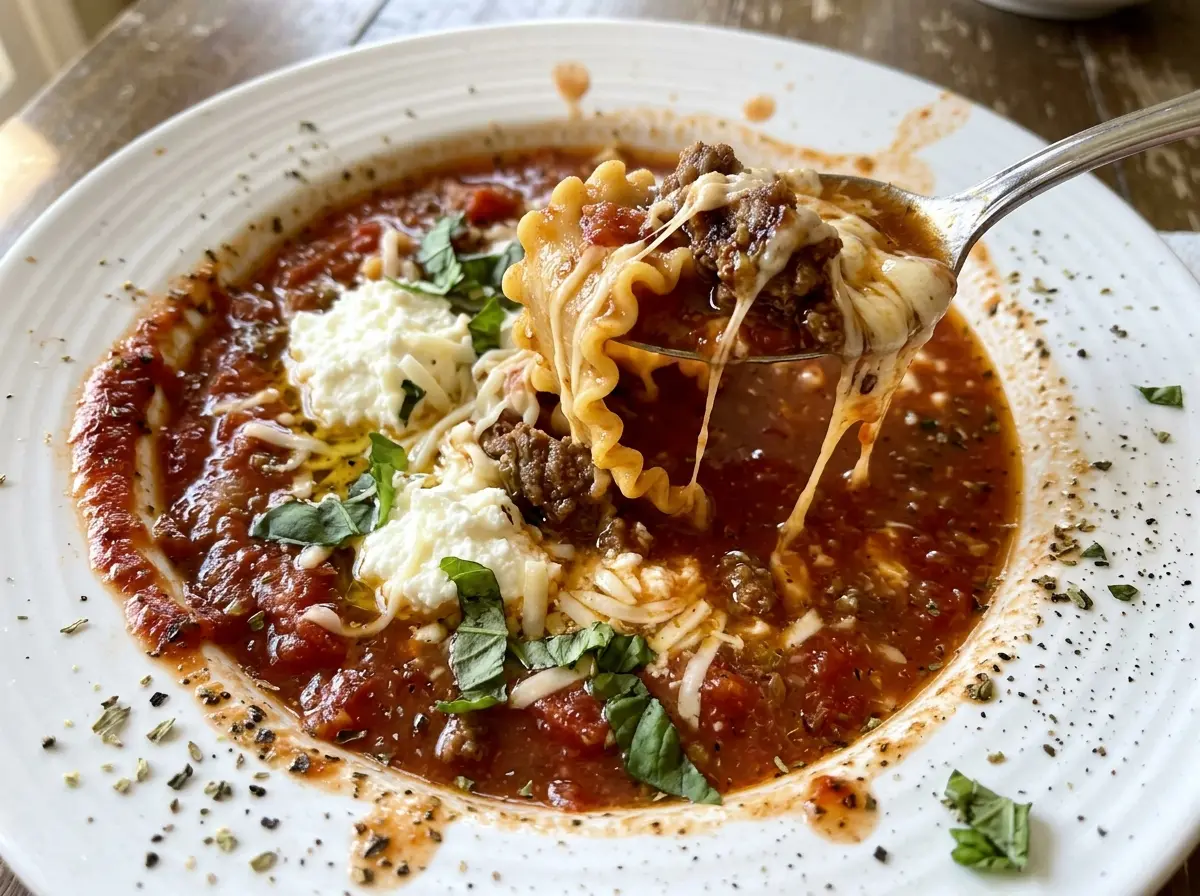
There’s one small balance to keep in mind: the noodles keep soaking up broth as they sit. I serve the soup as soon as the pasta is tender, with a spoonful of the ricotta, mozzarella, Parmesan, and parsley mixture on top of each bowl. The creamy cheese softens into the hot tomato broth without taking over, and every bowl gets its own generous topping.
Kitchen Note
I stir the cheese topping together while the noodles simmer, so it’s ready when the soup is. Keep it in the bowl and spoon it onto each serving instead of stirring it into the pot; that way the ricotta stays creamy and distinct.
Save this lasagna soup with spaghetti sauce for a cozy bowl of tomato-rich broth, tender noodles, and a creamy cheese topping.
Why This Soup Needs More Than a Jar of Spaghetti Sauce
Jarred spaghetti sauce is a shortcut, but it’s not the whole broth. Chicken broth stretches the tomato base into soup, while diced tomatoes add little pockets of tomato instead of leaving every spoonful completely smooth. The beef and softened onion give that lighter liquid a savory backbone, and oregano with a little red pepper rounds it out.
The sauce and broth are doing different jobs, so the soup tastes more balanced than a pot of thinned-out pasta sauce. Low-sodium broth also gives you a little more control over the finished seasoning, since jarred sauces can vary from brand to brand. The noodles will absorb some liquid as they cook, so the broth should look generous when the pasta first goes in. Don’t judge the final consistency before the noodles are tender.
This is also why I don’t add the cheese mixture to the full pot. Ricotta, mozzarella, and Parmesan are rich, and a spoonful on each bowl gives you creamy bites alongside the tomato broth rather than turning the whole pot into a thick cheese soup.
What the Sauce, Noodles, and Cheese Each Bring to the Pot
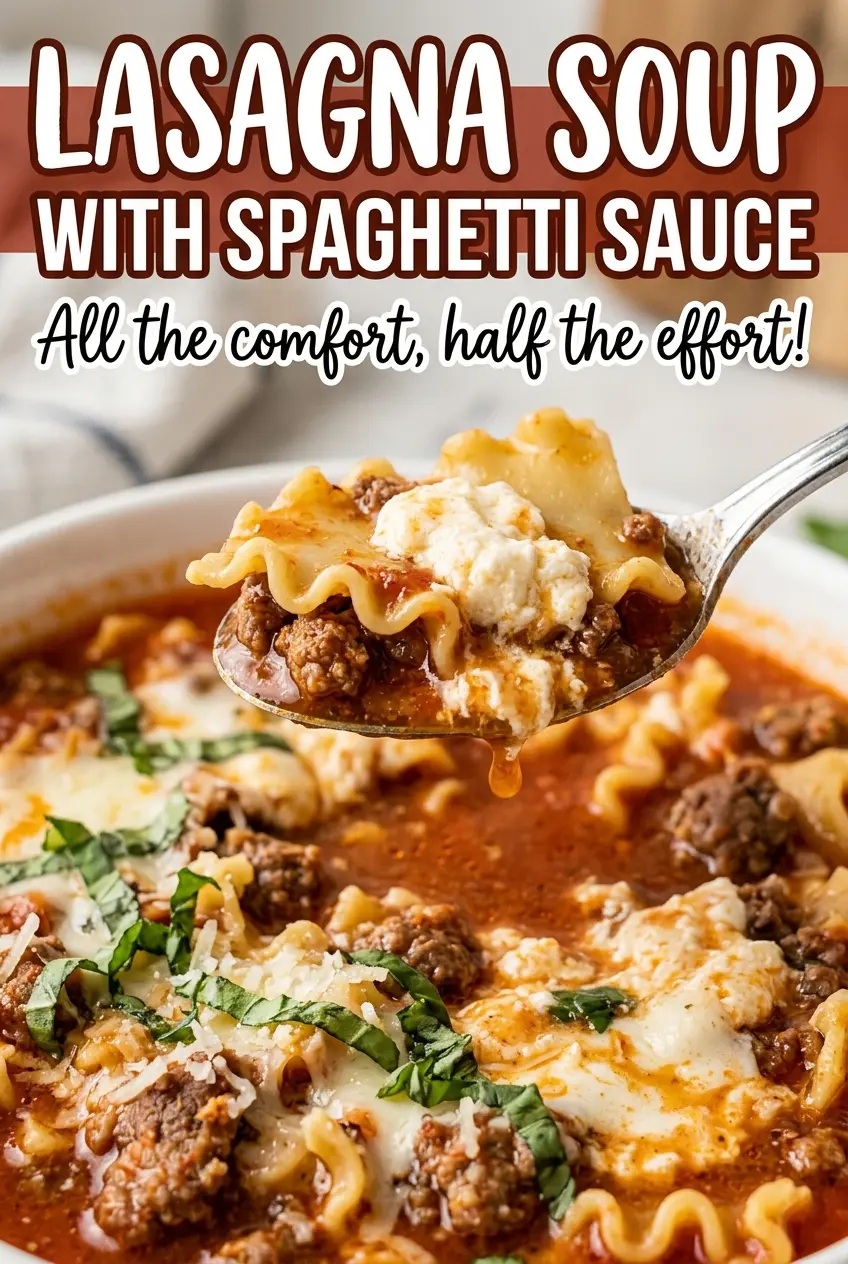
- Spaghetti sauce — Choose a tomato-based sauce you already enjoy; its seasoning carries through the broth, so a sauce that tastes good from the jar gives the soup a head start. A familiar store brand works just as well as a pricier jar here.
- Ground beef — The 85% lean beef brings savory flavor and enough fat to brown well. Breaking it up as it cooks helps it distribute through the soup instead of clumping into large pieces.
- Lasagna noodles — Breaking the sheets into bite-size pieces gives you the familiar lasagna shape in a spoonable format. Use regular dried lasagna noodles for the cooking time here; fresh pasta won’t behave the same way in the simmer.
- Ricotta, mozzarella, and Parmesan — Whole-milk ricotta makes the topping soft and creamy, mozzarella adds stretch, and Parmesan brings a sharper, salty edge. Freshly shredded mozzarella melts into the topping more smoothly than pre-shredded cheese, though either works.
- Garlic, oregano, and red pepper flakes — These bloom briefly in the hot beef and onion before the liquid goes in, which gives their flavor a chance to spread through the base. Keep the red pepper flakes in the mix for gentle warmth, or leave them out if you prefer no heat.
- Fresh parsley — Chopped parsley keeps the cheese mixture tasting fresh against the rich tomato broth. Dried parsley won’t give the topping the same bright finish, so fresh is worth using here.
Build the Broth First, Then Let the Noodles Cook in It
Brown the beef and soften the onion
Heat the olive oil in a 6-quart Dutch oven over medium-high heat, then add the ground beef and diced onion. Cook for 7 to 9 minutes, breaking the beef into small pieces, until the beef reaches 160°F and the onion has softened. If the beef is still in large clumps, break it up before moving on so each bowl gets an even mix. Drain the excess fat before adding the seasonings.
Wake up the garlic and dried seasonings
Stir in the minced garlic, dried oregano, and red pepper flakes. Cook them for 30 seconds, stirring so the garlic doesn’t sit against the hot pot and scorch. You’ll smell the garlic and oregano as they warm; that’s the cue to add the liquids promptly. Garlic can turn bitter if it browns, so don’t leave this stage unattended.
Bring the tomato broth to a boil
Pour in the spaghetti sauce and low-sodium chicken broth, then add the diced tomatoes, kosher salt, and black pepper. Stir across the bottom of the pot to loosen any browned bits left from the beef. Bring the mixture to a boil over medium-high heat before adding the pasta. Starting with a bubbling broth helps the noodles cook evenly once they go in.
Simmer the broken noodles until tender
Stir in the broken lasagna noodles, then reduce the heat to maintain a simmer and cook uncovered for 10 to 12 minutes. Stir often, reaching along the bottom of the pot so the pasta doesn’t settle and stick as it softens. Keep the liquid at a steady simmer rather than a hard boil. The noodles are ready when they’re tender all the way through.
Mix the topping and finish each bowl
While the soup simmers, stir the ricotta, shredded mozzarella, grated Parmesan, and chopped fresh parsley together in a medium bowl. Once the noodles are tender, ladle the soup into bowls. Add a spoonful of the cheese mixture to each serving. The hot soup will soften the cheese as you eat.
Easy Swaps for Different Tables
Use Italian sausage for a bolder bowl
Replace the ground beef with the same amount of ground Italian sausage. It brings its own seasoning and a more pronounced savory flavor, so drain excess fat after browning as you would with the beef.
Make a vegetarian pot
Swap in plant-based ground crumbles for the beef and vegetable broth for the chicken broth. Cook the crumbles according to their package directions before continuing with the onion and soup base; the result keeps the tomato-and-cheese character but won’t have the same beefy depth.
Choose gluten-free lasagna noodles
Replace the regular lasagna noodles with gluten-free lasagna noodles, breaking them into bite-size pieces. Gluten-free brands can soften at different rates, so use the package timing as your guide and stir gently as the pasta cooks; the pieces may be more delicate than wheat noodles.
Storage and Reheating
- Refrigerator: Store the soup in an airtight container for 3 to 4 days. The noodles will continue to absorb broth and soften as it sits.
- Freezer: For the best texture, freeze the soup base before adding the noodles. Cool it, store it airtight for up to 3 months, then thaw it in the refrigerator and add fresh noodles as the soup simmers. The cheese topping is best made fresh rather than frozen.
- Reheating: Warm refrigerated soup gently on the stovetop, stirring often, until it reaches 165°F. Avoid a hard boil, which can make the already-soft noodles break apart.
Questions That Come Up While the Soup Simmering
Lasagna Soup With Spaghetti Sauce
Ingredients
Equipment
Method
- Heat the olive oil in a 6-quart Dutch oven over medium-high heat.
- Add the ground beef and onion and cook for 7 to 9 minutes, breaking up the beef, until the beef reaches 160°F and the onion is softened; drain excess fat.
- Stir in the garlic, oregano, and red pepper flakes and cook for 30 seconds.
- Stir in the spaghetti sauce, chicken broth, diced tomatoes, salt, and black pepper.
- Bring to a boil over medium-high heat.
- Stir in the broken lasagna noodles and reduce the heat to maintain a simmer.
- Cook uncovered for 10 to 12 minutes, stirring often, until the noodles are tender.
- While the soup simmers, stir together the ricotta, mozzarella, Parmesan, and parsley in a medium bowl.
- Ladle the soup into bowls and top each serving with a spoonful of the cheese mixture.