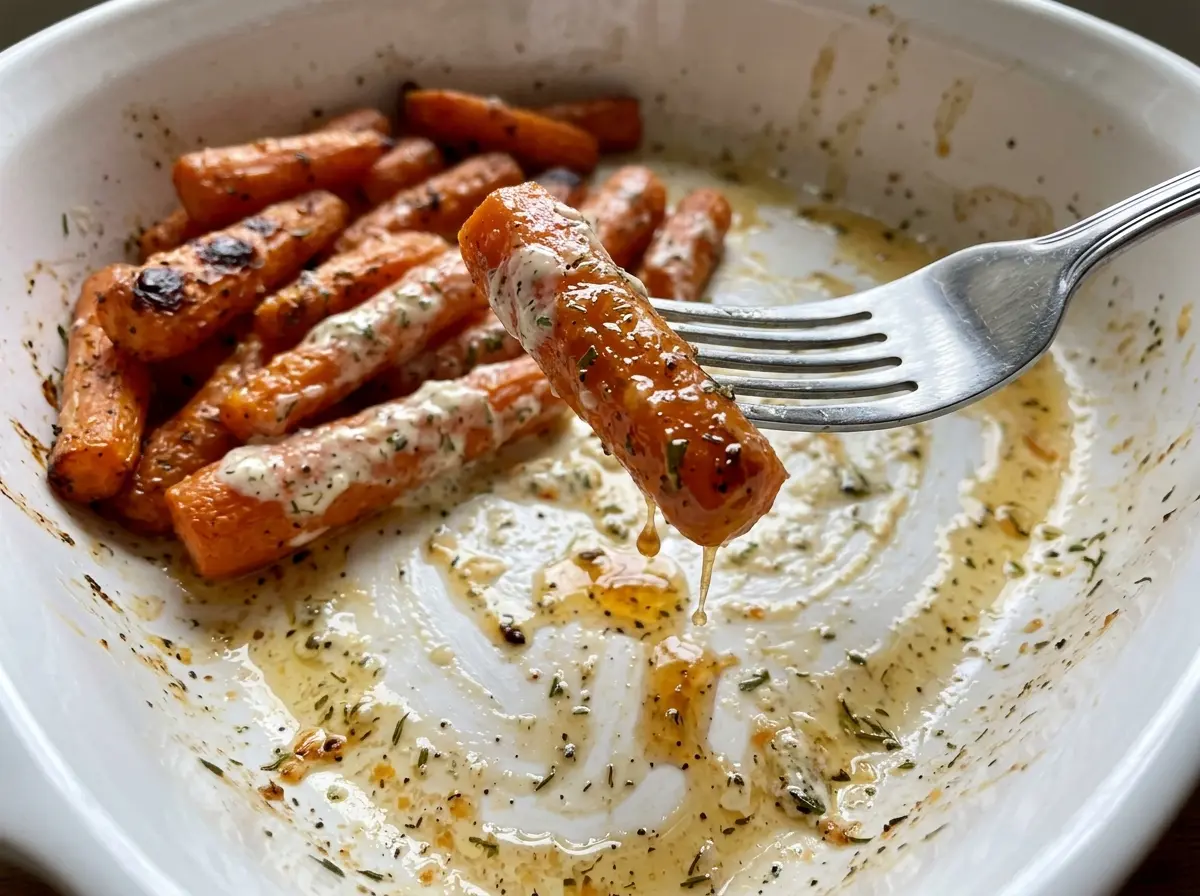
At 425°F, the carrot edges start to bronze while the centers turn tender, and that contrast is what makes this tray more than soft, sweet vegetables. Ranch Roasted Carrots bring a savory, herby coating to that natural sweetness without covering it up. I watch for browned edges and a tender center rather than expecting every piece to look exactly alike; carrots can vary a little in thickness, even after cutting.
The seasoning coats best when it meets the olive oil in the bowl, before the carrots go onto the pan. I toss everything together until the pieces look evenly covered, then give them room in a single layer so they roast instead of steam. Turning them halfway through helps expose more edges to the hot pan. The result is a simple side with tender centers and the little browned bits that make roasted carrots worth turning the oven on for.
Kitchen Note
Turn the carrots halfway through roasting, while they’re starting to soften but before every edge is deeply browned. That gives the newly exposed sides time to color, too, instead of leaving all the browning on one face.
Save these Ranch Roasted Carrots for an easy savory side with browned edges and tender centers.
Why the Half-Inch Cut Helps Every Carrot Roast Evenly
Carrots aren’t uniform vegetables: a thick piece needs longer in the oven than a narrow one, and a tray with a mix of sizes can turn out tender in some spots and firm in others. Cutting them into pieces about 1/2 inch thick keeps the cooking more even. It also gives the outside enough surface area to brown while the inside softens, rather than leaving you with a browned exterior and a hard center.
Spacing matters for the same reason. When the pieces sit in a single layer with a little room around them, the hot oven can reach their surfaces. If they’re piled together, moisture collects between them and the carrots soften before their edges get much color. Use a large rimmed baking sheet so the pieces can lie flat without rolling off the sides. A little variation in shape is fine; aim for similar thickness, not perfectly identical pieces.
What the Carrots, Oil, and Ranch Seasoning Each Bring

- Carrots — Firm carrots are easiest to peel and cut cleanly, and they hold their shape as they roast. Everyday carrots work well; there’s no need to seek out a specialty variety. Peel them and cut pieces to a consistent thickness so they soften at roughly the same pace. If you’re using baby carrots, split thicker ones lengthwise so they’re closer in size to the other pieces.
- Olive oil — The oil helps the ranch seasoning cling to the carrots and keeps the surfaces from drying out in the oven. A mild, everyday olive oil is a good fit here; a peppery or strongly flavored oil can compete with the seasoning, and an expensive bottle isn’t necessary. If you’re out, another mild cooking oil can stand in at the same measure, though it won’t bring quite the same olive-oil note.
- Ranch seasoning mix — A dry mix is what gives the carrots an even savory coating without adding liquid to the pan. Store-brand mixes work; the salt level and herb balance vary by brand, so taste the finished carrots before adding any extra salt. The closest swap is a different dry ranch seasoning mix used in the same quantity. Ranch dressing isn’t an equivalent replacement because its moisture changes how the carrots roast.
How to Coat the Carrots and Roast Them Until Tender
Cut the Carrots to a Similar Thickness
Heat the oven to 425°F, then peel the carrots and cut them into pieces about 1/2 inch thick. Try to keep the pieces close in thickness, even if their lengths vary. A very thin piece beside a much thicker one can brown and soften at a different rate. This small bit of attention at the cutting board helps the whole tray finish together.
Coat Each Piece in the Bowl
Put the cut carrots in a large bowl with the olive oil and ranch seasoning mix. Toss until the oil and seasoning are distributed over the surfaces, scraping the bottom of the bowl if seasoning settles there. Look for an even, lightly coated appearance rather than dry patches of seasoning at the bottom. Tossing in the bowl first is easier than trying to spread the coating around on the baking sheet.
Roast in a Single Layer and Turn Halfway
Spread the carrots in a single layer on a large rimmed baking sheet, leaving space between pieces where you can. Roast for 25 to 30 minutes, turning them halfway through, until they’re tender and browned at the edges. If the tray is crowded, the carrots are more likely to soften without developing much color, so use enough pan space for the pieces to lie flat. Check for both tenderness and browned edges; either cue on its own doesn’t tell the whole story.
Two Ranch Seasoning Swaps for Different Dietary Needs
Choose a Gluten-Free Ranch Mix
For a gluten-free version, use a gluten-free dry ranch seasoning mix in place of the regular mix, keeping the same measure. The carrots roast the same way, though the herb and salt balance may differ slightly by brand.
Use a Dairy-Free Ranch Mix
A dairy-free dry ranch seasoning mix makes this a workable dairy-free side; use the same measure as the regular mix. The coating may taste a little less creamy or tangy, but it still seasons the carrots without changing the roasting method.
Storage and Reheating
- Refrigerator: Keep leftovers in an airtight container for 3 to 4 days. They’ll soften in the refrigerator and won’t have quite the same browned edges.
- Freezer: They can be frozen in an airtight freezer-safe container for up to 2 months, but expect a softer texture after thawing. Thaw them in the refrigerator before reheating.
- Reheating: Warm only the portion you plan to eat in the microwave, stirring once, until it reaches 165°F throughout. Long, high-power heating can make the carrots mushy.
Questions That Come Up When Roasting Ranch Carrots
Ranch Roasted Carrots
Ingredients
Equipment
Method
- Heat the oven to 425°F.
- Toss the carrots with the olive oil and ranch seasoning mix in a large bowl.
- Spread the carrots in a single layer on a large rimmed baking sheet.
- Roast for 25 to 30 minutes, turning halfway through, until tender and browned at the edges.