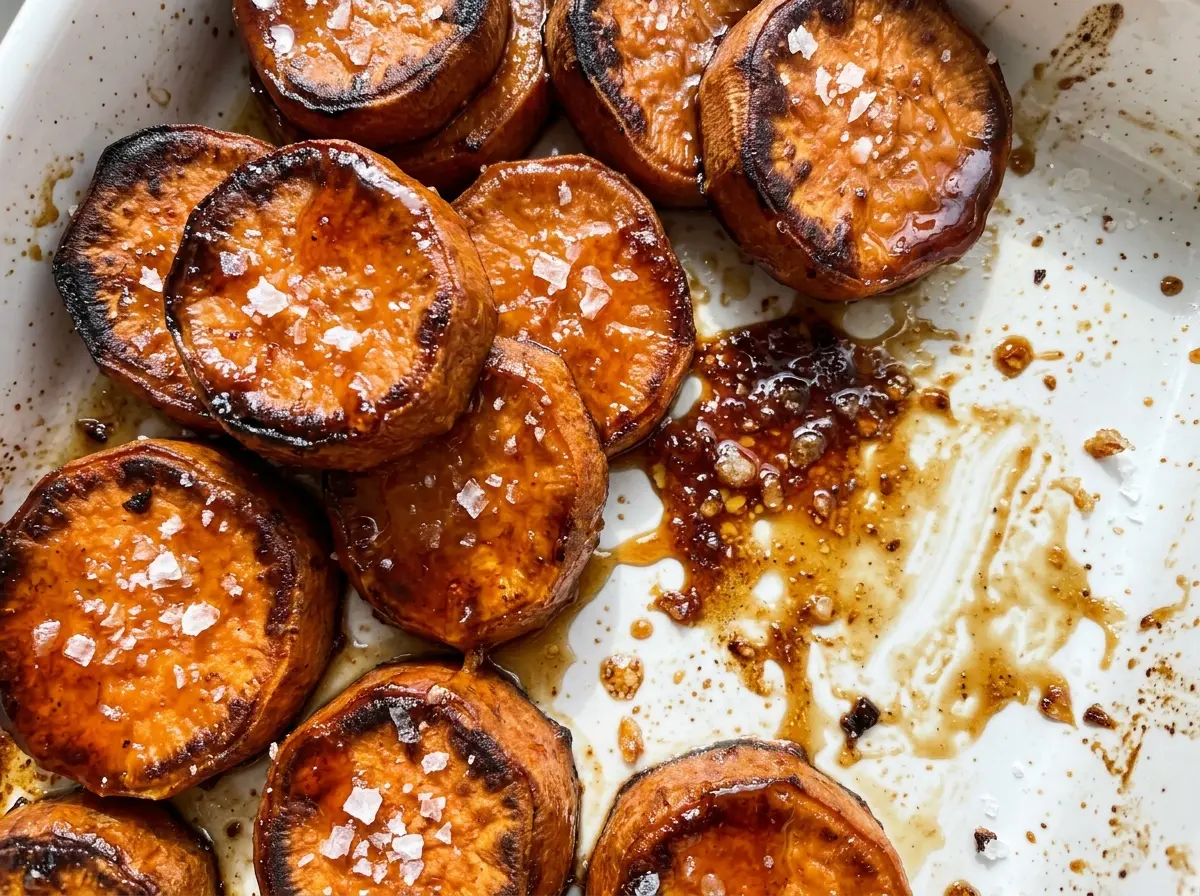
When the honey goes onto the hot tray, it meets sweet potatoes that have already started to soften and pick up color. It coats the warm, oil-glossed cubes instead of sitting on them from the start. That timing is what gives Sea Salt Honey Caramelized Sweet Potatoes their browned edges without asking the honey to roast for the entire time.
I toss the peeled cubes with olive oil and fine sea salt, then roast them before adding the honey. The short second roast turns the coating sticky and golden while the centers finish becoming tender. The result is sweet but not candy-like, with enough salt to keep each bite balanced and edges that are worth picking off the pan.
Kitchen Note
Cut the potatoes into cubes close to 1 inch. Smaller pieces soften sooner during the honey-roasting stretch, while larger ones can still be firm in the middle when their edges brown.
Save these honey caramelized sweet potatoes for their tender centers and browned, sticky edges.
Why a Single Layer Gives These Sweet Potatoes Their Caramelized Edges
Sweet potatoes release moisture as they roast. If the cubes are piled on top of one another, that moisture gets trapped between them and the pieces soften before their surfaces have room to brown. A single layer gives the hot oven access to the exposed sides, so the edges can color rather than steam.
The rimmed 18×13-inch baking sheet gives the potatoes room to spread out, but placement still matters. Set the cubes down with a little space between them instead of tipping them into a mound in the middle. If the tray looks crowded, redistribute the pieces before it goes into the oven; an even layer is more useful here than a thick coating of honey. The honey brings shine and sweetness at the end, but it can’t make crowded potatoes brown.
What the Sweet Potatoes, Olive Oil, and Honey Each Bring

- Sweet potatoes — Choose firm potatoes without soft spots; they should feel solid when you handle them. Peel them and cut the pieces evenly so they cook at a similar pace. Garnet and jewel varieties both work well here, and there’s no need to seek out a specialty variety.
- Olive oil — The oil coats the cubes so the salt sticks and the surfaces roast rather than dry out. A standard olive oil is fine; save a pricier finishing oil for a dish where its flavor stays uncooked. Avocado oil works as a one-for-one replacement if you prefer a more neutral taste.
- Honey — Liquid honey spreads over the hot potatoes when you toss them, leaving a thin coating that browns during the final roast. A mild honey keeps the sweet potato flavor out front, while a darker, more assertive honey makes the glaze taste more pronounced. For a vegan version, use liquid maple syrup in the same quantity; the finish will taste more maple-forward.
- Fine sea salt — Its fine grains distribute evenly across the cubes during the initial toss. That even seasoning matters because the honey goes on later, after the potatoes have already begun to roast.
Roasting the Sweet Potatoes Before the Honey Goes On
Peel, Cube, and Coat the Potatoes
Heat the oven to 425°F and line a rimmed 18×13-inch baking sheet with parchment paper. Peel the sweet potatoes and cut them into 1-inch cubes, then toss them with the olive oil and fine sea salt in a large bowl. Turn the pieces until they have a light, even sheen rather than leaving dry patches at the bottom of the bowl. Spread them across the prepared pan in a single layer.
Give the Cubes Their First Roast
Roast the potatoes for 20 minutes before adding the honey. At this point, stir the cubes so a different set of sides meets the hot pan and the pieces cook more evenly. Use a spatula to turn them through the oil on the parchment rather than leaving the browned sides facing up. The potatoes are not finished yet; the next roast is where the glaze goes on and the centers become tender.
Toss with Honey and Finish Roasting
Drizzle the honey over the potatoes after stirring, then toss the pieces to coat them. Spread them back out across the pan instead of leaving them in a pile. Roast for 10 to 15 minutes more, until the sweet potatoes are tender and browned at the edges. Check the largest pieces for tenderness so you don’t pull the tray while their centers are still firm.
Easy Ways to Adapt the Honey and the Finish
Make the Tray Vegan with Maple Syrup
Replace the honey with the same quantity of liquid maple syrup and add it at the same point in the roast. The potatoes will still get a glossy coating, with a more distinct maple flavor instead of honey’s floral sweetness.
Use Avocado Oil for a Neutral Finish
Swap the olive oil for the same quantity of avocado oil if you want the honey and sweet potato to lead without the olive oil’s fruitiness. The coating still helps the cubes roast evenly, but the overall flavor comes across a little more simply.
Try a Skin-On Tray
Scrub the sweet potatoes well and leave the skins on instead of peeling them. The finished cubes have a more noticeable, slightly firmer exterior, while the centers stay soft; the skins won’t have the same smooth texture as peeled pieces.
Storage and Reheating
- Refrigerator: Store leftovers in an airtight container for 3 to 4 days. The edges soften as the potatoes chill.
- Freezer: Freeze in an airtight container for up to 2 months. They’ll be safe to eat, though thawed sweet potatoes tend to be softer and less distinct at the edges.
- Reheating: Spread them on a baking sheet and warm them in a 400°F oven until heated through. A microwave works for convenience, but it softens the edges further rather than bringing back their roasted texture.
Questions About Honey Caramelized Sweet Potatoes
Sea Salt Honey Caramelized Sweet Potatoes
Ingredients
Equipment
Method
- Heat the oven to 425°F.
- Line a rimmed 18x13-inch baking sheet with parchment paper.
- Toss the sweet potatoes with the olive oil and sea salt in a large bowl.
- Spread the potatoes in a single layer on the baking sheet.
- Roast for 20 minutes.
- Stir the potatoes.
- Drizzle with the honey and toss to coat.
- Roast for 10 to 15 minutes more, until the potatoes are tender and browned at the edges.