Deep, savory broth with sweet caramelized onions, earthy wild mushrooms, and just enough kale to give each spoonful some body — this is the kind of soup that tastes like it took all day, even though most of the work is just letting onions do their thing. The mushrooms bring a meaty bite, the sherry lifts everything at the end, and the porcini soaking liquid gives the pot a dark, woodsy depth you can’t fake with plain broth.
What makes this version work is patience at the start and restraint at the finish. The onions need time to turn truly golden and jammy, not just soft. The mushrooms need enough heat to brown before they give up their moisture, or you end up with a gray, watery pot. Then the kale goes in at the very end so it stays tender but still has some texture.
Below, I’ve included the little details that keep this soup tasting balanced instead of flat, plus a few smart swaps if you need to work with what’s already in your kitchen.
The onions went from sharp to sweet and the broth turned deep brown after I added the porcini soaking liquid. I loved that the kale stayed tender but didn’t turn mushy, and the truffle oil at the end made it taste restaurant-level.
Save this wild mushroom, caramelized onion, and kale soup for the nights when you want a deeply savory bowl with almost no shortcut flavor.
The Reason This Soup Tastes Deeper Than a Standard Mushroom Bowl
The flavor here comes from layering brown, savory notes instead of relying on one big mushroom hit. The onions are cooked until they turn deep gold and start to collapse into themselves, which gives the broth sweetness and body. If you rush that step, the soup will still taste fine, but it won’t have the same slow-cooked depth.
The other thing that matters is browning the fresh mushrooms before the broth goes in. Mushrooms hold a lot of water, and if the pan is too crowded or the heat is too low, they steam instead of caramelize. You want the edges to take on color and the pan to develop those dark bits that later dissolve into the soup when you deglaze.
Porcini are the quiet advantage in this pot. Even a small amount adds a concentrated, woodsy flavor that makes the broth taste fuller without needing cream.
What Each Ingredient Is Actually Doing in This Soup
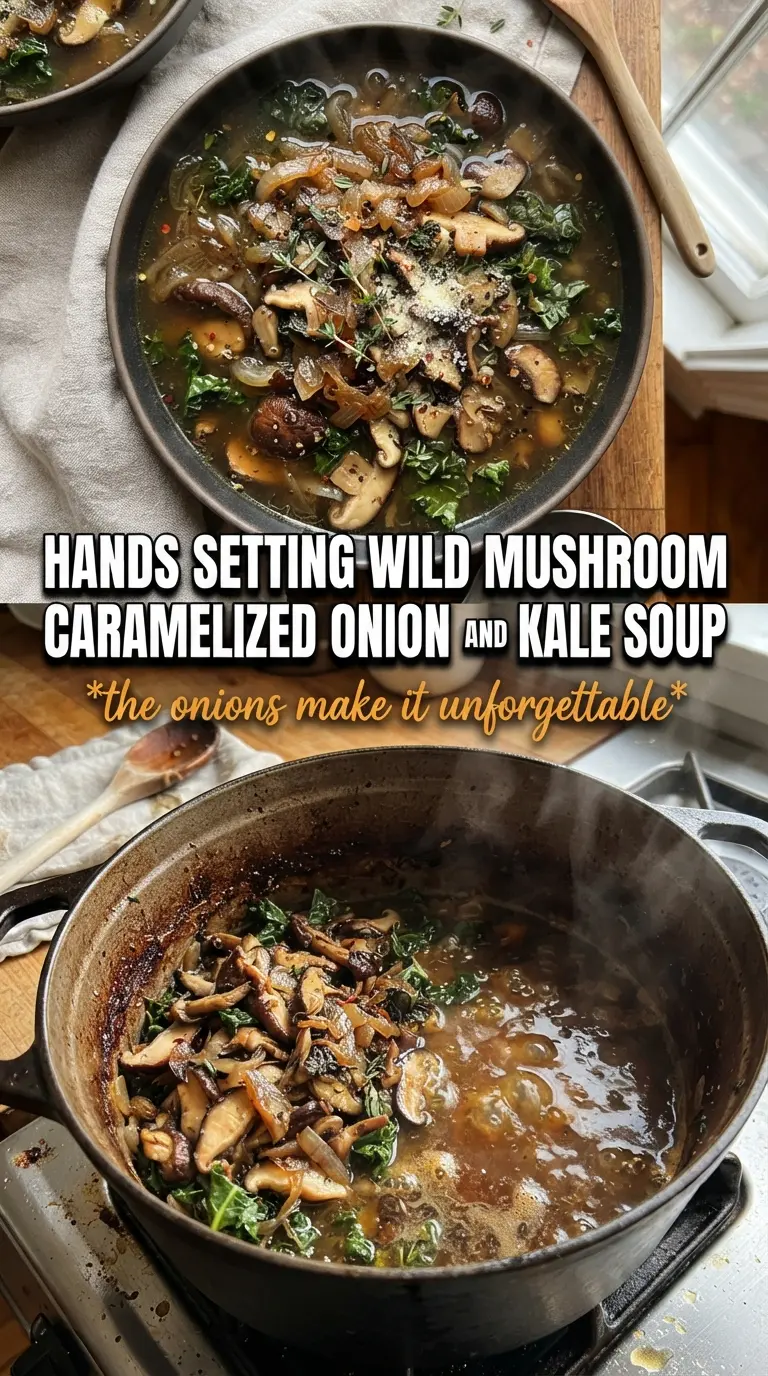
- Mixed wild mushrooms — Shiitakes bring depth, cremini add that familiar mushroom base, and oysters soften into tender, delicate pieces. If you can’t find all three, use any mix with at least one variety that browns well.
- Dried porcini mushrooms — These are what make the broth taste like more than broth. Soaking them in hot water pulls out a concentrated liquid you’ll use in the soup, but strain it well so grit stays out of the pot.
- Onions — This is where the sweetness comes from. Thin slices cook down evenly and caramelize faster than thick ones; if you cut them too thick, they soften before they truly brown.
- Dry sherry or white wine — The deglaze step brightens the pot and lifts up the browned bits on the bottom. Use a dry wine, not anything sweet, or the soup can taste muddy.
- Kale — It adds structure and a little bitterness that keeps the soup from tasting one-note. Remove the stems so the leaves wilt evenly and don’t leave stringy bites behind.
- Balsamic vinegar — Just a tablespoon rounds out the mushrooms and onions without making the soup taste tangy. It’s there for balance, not for a vinegar note.
- Parmesan and truffle oil — These are finishing touches, not required ingredients. Parmesan adds salty umami, and truffle oil should be used sparingly because a little goes a long way.
How to Build the Broth Without Losing the Mushroom Flavor
Caramelizing the onions first
Start with the butter and olive oil in a heavy pot over medium heat, then add the onions and let them cook slowly until they’re deeply golden and sweet-smelling. Stir them often enough to keep them from scorching, but don’t babysit them so much that they never pick up color. If the heat is too high, they’ll brown on the outside and stay sharp in the center. If the pot starts to look dry before the onions are ready, add a small splash of water and keep going.
Brown the mushrooms before the liquid goes in
Add the garlic and fresh mushrooms once the onions are ready, then cook until the mushrooms have lost their raw look and picked up browned edges. This stage is where the soup gets its meaty texture. If you crowd the pan, the mushrooms release water and turn pale instead of savory, so use a pot large enough for some space. Let the moisture evaporate before moving on.
Use the deglaze step to pull flavor off the bottom
Pour in the sherry or white wine and let it bubble for a couple of minutes, scraping up the browned bits stuck to the pot. That layer on the bottom is concentrated flavor, and it disappears into the broth once the liquid hits it. After that, add the strained porcini soaking liquid, the porcini themselves, broth, thyme, and balsamic vinegar. Simmer long enough for everything to meld before the kale goes in.
Finish with the kale at the end
Stir in the chopped kale and cook just until it turns dark green and wilted, not soft enough to lose its shape. Kale only needs a few minutes, and overcooking it leaves the leaves drab and slippery. Season at the end with salt and pepper, then serve with Parmesan shavings and a light drizzle of truffle oil. Too much truffle oil can take over the bowl, so use it like perfume, not a sauce.
How to Adapt This Soup When You Need to Work Around the Pantry
Make it vegetarian without losing depth
Use a good vegetable broth instead of beef broth and keep the porcini soaking liquid in the pot. That combination still gives the soup a dark, savory backbone. If your vegetable broth tastes thin, let the soup simmer a few extra minutes before adding the kale so the flavor tightens up.
Skip the dairy and still keep the soup rich
Use olive oil only and leave off the Parmesan at serving. The soup will still taste full because the onions, mushrooms, and porcini are doing most of the work. If you want a little extra body, blend one ladleful of the soup and stir it back in.
Replace the sherry with what you already have
Dry white wine works well, and even a splash of dry vermouth can do the job. The point is to lift the browned bits from the pot and add a little acidity, so avoid sweet wines. If you’re using broth instead, add an extra teaspoon of balsamic vinegar at the end to give the soup a brighter finish.
Storage and Reheating
- Refrigerator: Keeps well for 4 days. The flavor gets even deeper overnight, though the kale softens a bit more.
- Freezer: Freezes well for up to 2 months if you leave off the Parmesan and truffle oil until serving. Cool it completely before freezing in airtight containers.
- Reheating: Warm it gently on the stove over medium-low heat until steaming. Don’t boil it hard, or the mushrooms can turn rubbery and the greens lose their texture.
Answers to the Questions Worth Asking
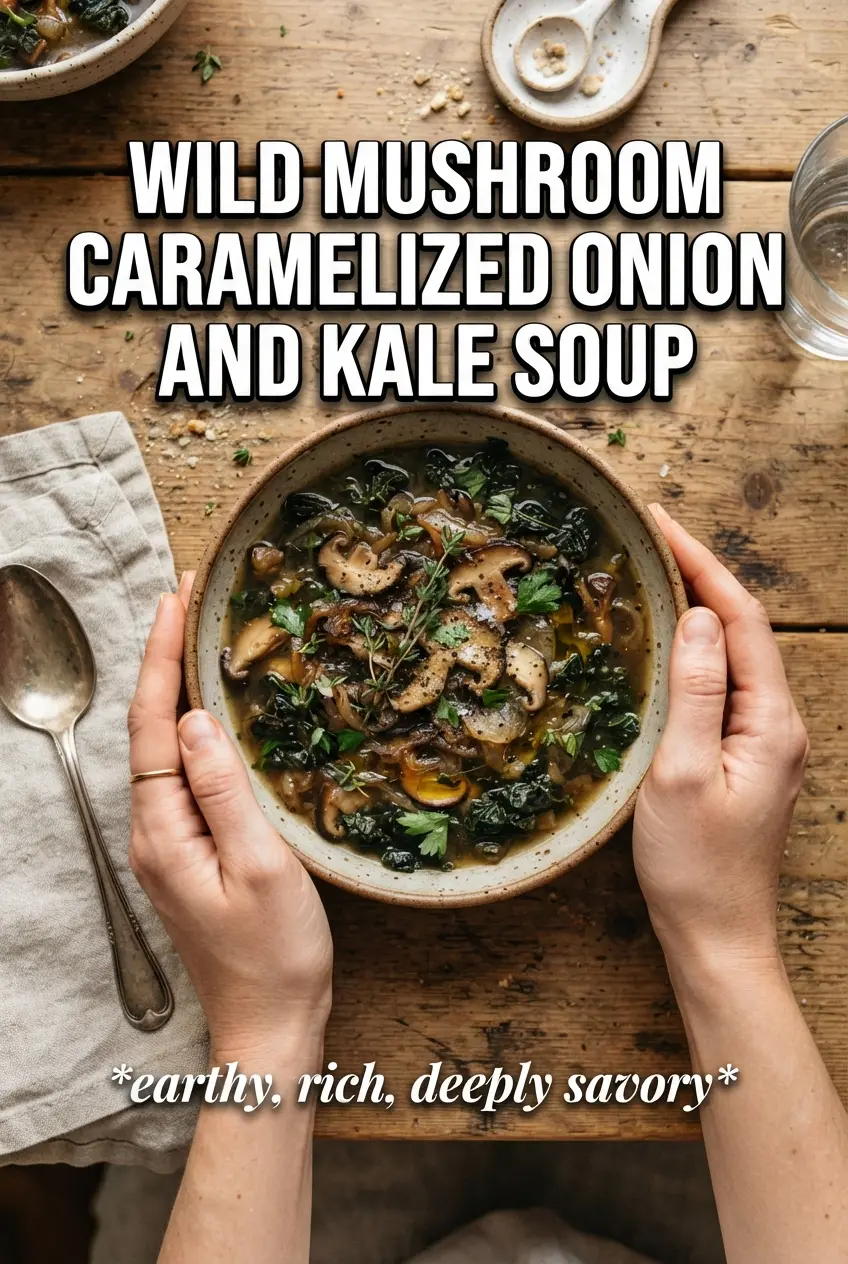
Wild Mushroom Caramelized Onion and Kale Soup
Ingredients
Equipment
Method
- Melt butter with olive oil in a large heavy pot over medium heat; add the thinly sliced onions and cook 35-40 minutes, stirring occasionally, until deeply golden and caramelized.
- When the onions are caramelized, add the minced garlic and sliced mixed wild mushrooms and cook 8 minutes until the mushrooms are browned.
- Pour in the dry sherry (or white wine) to deglaze and cook 2 minutes, scraping up the browned bits from the bottom of the pot.
- Drain the soaked dried porcini mushrooms (reserve the soaking liquid) and add the porcini along with the strained soaking liquid, broth, fresh thyme, and balsamic vinegar.
- Simmer for 15 minutes, then add the chopped kale and cook 5 minutes until wilted.
- Season with salt and pepper to taste, then ladle into bowls and top with Parmesan shavings and a drizzle of truffle oil.